Book Review – Sapiens: a Graphic History, Volume 1 – The Birth of Humankind

When I was small the profession that fascinated me most was anthropology. And even recently I was going through IGNOU’s egyankosh and reading the MA in Anthropology course material. So it was with natural delight that I read Sapiens – a graphic history. The graphic version of the international best seller, this book is a must read. The book is a revelation from beginning to end. From information on the different hominins – Homo Floresiensis, Homo Denisova, Homo Erectus, Homo Luzonensis, Homo Neanderthalensis to some fascinating information on our prehistory this book is one roller coaster ride from beginning to end. A wholly marvellous read.

Storytelling is a metaphor for life itself – Kathalaya News

Storytelling is a metaphor for life itself.

It helps us connect the familiar with the unknown,

and in that process, we begin to connect more deeply with ourselves.

This June, Geeta Ramanujam will be facilitating the 8th Storytelling Course at the Himalayan Writing Retreat — a 4-day residential journey from June 12th to 15th.

Set in the serene beauty of the Himalayas, this is not just about learning storytelling.

It is about experiencing it — feeling it, living it, and allowing it to unfold within you.

As stories emerge, they begin to blend with your own inner journeys,

creating a space for reflection, expression, and meaningful connection.

✨ This is not just a retreat.

✨ It is a transformation.

If you are looking to pause, reconnect, and rediscover your voice through stories,

this journey might be just what you need.

Begin your journey with Geetha Ramanujam.

Certified Intensive Beginner Storytelling Course. 

At Himalayan Writing Retreat,  Satkhol, Uttarakhand

📅 June 12-15 

Friday to Monday

For more details click

Geeta Ramanujam and the Bangalore story plus call for Kathalaya Storytelling Courses

What makes a city a space of storytellers?

In this thoughtful conversation, Geetha Ramanujam reflects on Bangalore —

its stories, its traditions, and the deeper role storytelling plays in shaping culture.

From the story of Punyakoti to the living heritage of Janapada Loka,

she reminds us that storytelling is not something we simply learn —

it is something we inherit, live, and carry forward.

In a world that leans towards information and writing,

this is a gentle return to:

✨ listening

✨ memory

✨ oral traditions

And what truly makes a storyteller.

If this resonates with you,

Kathalaya offers spaces to explore storytelling more deeply:

📞 For details: 82773 89840

🌿 Certified Intensive Beginner Storytelling Course 

Batch 183

📍 Kathalaya Centre, Bangalore

📅 April 17–19

Register: https://forms.gle/8B2xAo9oQAia7pdH6

Batch 184

📍 Defence Colony, Delhi

📅 June 5-7

Register: https://forms.gle/fZDxPTtSmXnhUSBC6

Batch 185

📍 Himalayan Writing Retreat, Satkhol, Uttarakhand

📅 June 12-15

Register: https://www.himalayanwritingretreat.com/event/storytelling-course-kathalaya/

🎓 The Diploma in Storytelling 

Batch 39

📍  Kathalaya Centre, Bangalore

📅 June 14-17

Register: https://forms.gle/CA4t9jBArZgVLKrG6

✨  Antardhwani Retreat – The Storytellers’ Inner voice

📍  Tiruvannamalai, Tamil Nadu

📅 July 17-19

Register: https://forms.gle/te5ZHJ3SZC6VyPxw6

The bird and Edicaran hill fossils

Subject: Prehistory

Concept: Creeping creatures

In c. 580 million years ago soft bodied animals with flat, leaf shaped body appeared. They had no distinct heads or legs but were able to creep around the sea floor. Many of the fossils were found in Edicara Hills and were known as Edicara animals. A bird lived on Edicara hill and found these fossils. These fossils spoke to her and described how as the Edicara animals they had crept and crawled on the sea floor.

The fish and the stromatolites

Subject: Prehistory

Concept: Origins of Photosynthesis

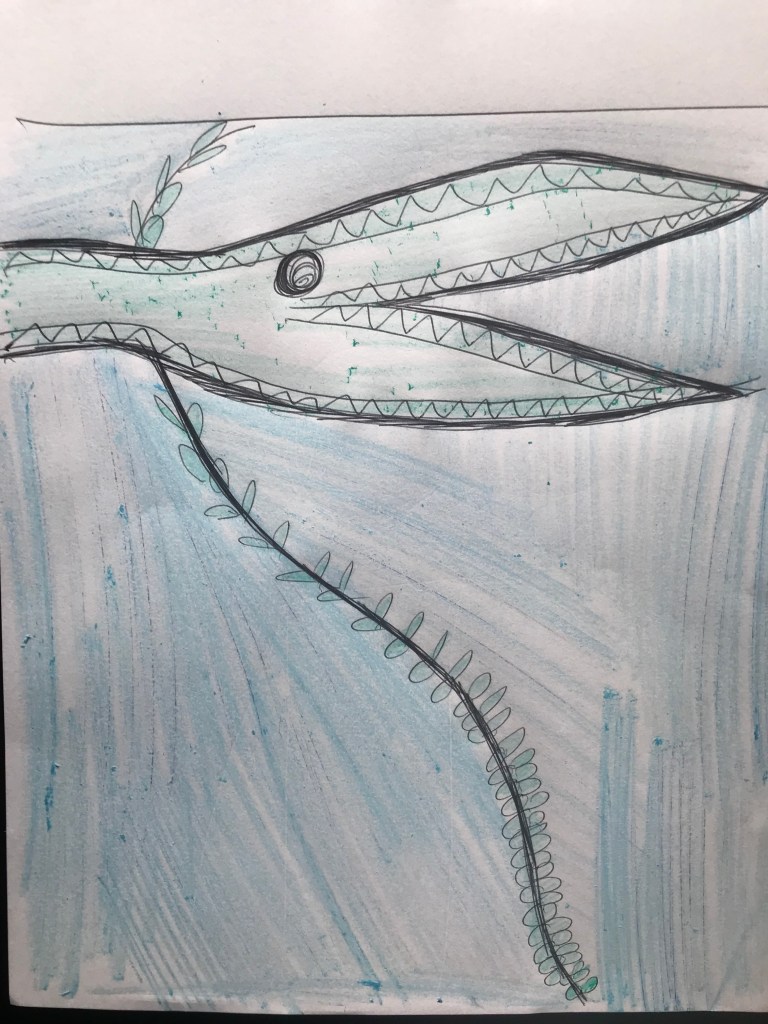
Once a fish was swimming in the seas. It came across some ancient stromatolites. It asked the older turtle who was swimming there what the stromatolites were. The turtle answered, “The stromatolites are the ancient remains of the ancient single celled organisms that grew in shallow water and built up to form rocky moulds.”

The fish asked, “All creatures eat something. What did these single celled organisms eat?”

“That is a good question,” said the turtle, “These single celled organisms began to harness sunlight to make food in a process known as photosynthesis. That was the first origin of photosynthesis.”